
Pancreatic Cancer: Symptoms, Causes, Diagnosis, and Treatment Explained
Pancreatic cancer is not something most people think about until it touches their life. It often develops silently, without clear warning signs, and by the time symptoms appear, the disease may already be advanced. That uncertainty is what makes it one of the most feared and misunderstood cancers.
Many early symptoms can feel vague or easy to ignore, such as back pain, fatigue, or digestive issues. Because these signs overlap with everyday health problems, people often delay seeking medical advice. Understanding what pancreatic cancer is, how it develops, and what warning signs to watch for can make a critical difference.
This guide breaks down everything you need to know, from symptoms and risk factors to diagnosis and treatment options, so you can recognize the signs early and make informed health decisions.
What Is Pancreatic Cancer?
Pancreatic cancer occurs when cells in the pancreas mutate and grow uncontrollably, forming a tumor. The pancreas is a gland located in the abdomen between the stomach and spine. It produces hormones that regulate blood sugar and enzymes that help digest food.
Most pancreatic cancers begin in the ducts that carry digestive enzymes. Early-stage pancreatic cancer Singapore is difficult to detect because tumors often do not appear on imaging tests. Many cases are diagnosed after the cancer has spread, making timely consultation with a pancreatic surgeon in Singapore essential.
Types of Pancreatic Cancer
1. Exocrine Tumors
Over 90 percent of pancreatic cancers are exocrine tumors. The most common type is adenocarcinoma, which starts in the cells lining the pancreatic ducts.
2. Neuroendocrine Tumors (NETs)
These rare tumors account for less than 10 percent of cases. They begin in hormone-producing cells and may behave differently from typical pancreatic cancers.
What are the signs and symptoms of pancreatic cancer?
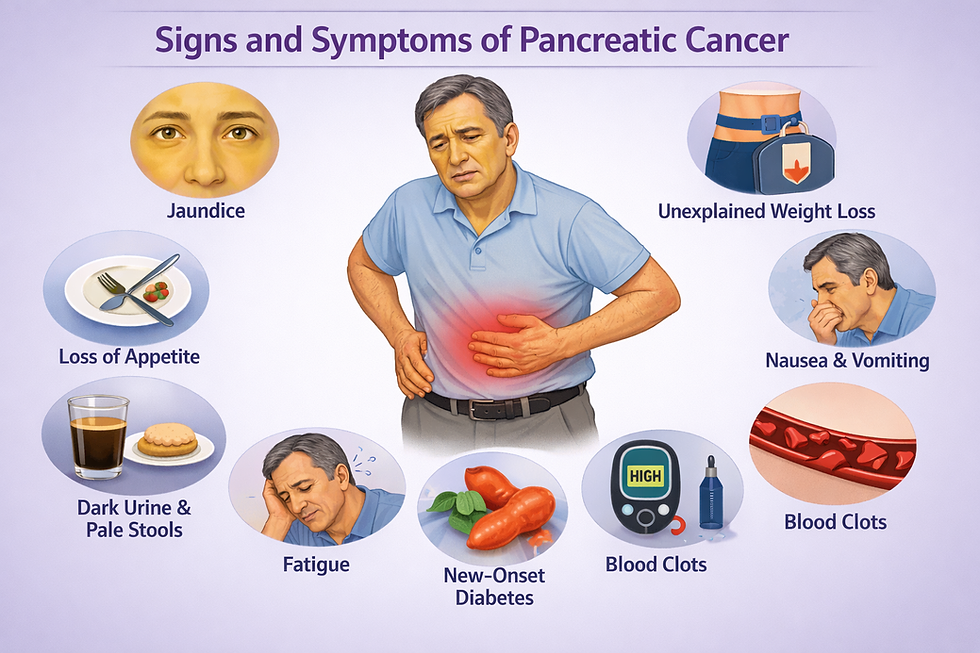
Early pancreatic cancer often shows no symptoms. Signs usually appear once the tumor affects nearby organs.
Common symptoms include:
Yellowing of the skin and eyes (jaundice)
Dark urine and pale stools
Upper abdominal pain
Unexplained weight loss
Loss of appetite
Nausea and vomiting
Itchy skin
Gas or bloating
Blood clots
New-onset diabetes
Neuroendocrine tumors may cause different symptoms, including diarrhea or anemia.
How Does Pancreatic Cancer Develop?
Pancreatic cancer starts when cells in the pancreas develop errors in their DNA. DNA controls how cells grow and when they die. When these instructions fail, cells multiply uncontrollably and form a tumor. Over time, the cancer can spread to nearby organs and other parts of the body. Early evaluation by a pancreas specialist Singapore can help identify risks and guide timely screening.
What Causes Pancreatic Cancer?
There is no single known cause. Experts believe pancreatic cancer develops due to a mix of genetic, lifestyle, and environmental factors.
Smoking or tobacco use
Type 2 diabetes
Chronic pancreatitis
Obesity
Age over 65
Family history of pancreatic cancer
Having multiple risk factors increases the chances more than having just one.
Possible Complications
As pancreatic cancer grows, it can cause serious health problems:
Weight loss: Poor digestion, reduced appetite, or cancer cells using more energy.
Jaundice: Tumors block the bile duct, causing yellow skin and eyes, dark urine, and pale stools.
Pain: Tumors pressing on abdominal nerves can cause constant discomfort.
Bowel obstruction: The tumor blocks the small intestine, affecting food passage; a stent, feeding tube, or surgery may be needed.
How Is Pancreatic Cancer Diagnosed?
Detecting pancreatic cancer early can be challenging, but doctors use a combination of tests to confirm the diagnosis and determine the best treatment.
Common Diagnostic Tests
Imaging tests
CT scans, MRI scans, and ultrasounds help doctors detect tumors and check whether the cancer has spread. These scans are often recommended for high-risk patients by a pancreatic cancer specialist Singapore.
Biopsy
Doctors take a small tissue sample from the pancreas to confirm cancer.
Blood Tests
Tumor markers like CA19-9 help detect and monitor pancreatic cancer.
Endoscopic Ultrasound
Doctors use a thin tube with an ultrasound device to view the pancreas closely.
Early diagnosis improves treatment options and survival outcomes.
Resectable vs. Unresectable Pancreatic Cancer
Doctors classify pancreatic tumors into categories based on whether surgery is possible:
Resectable: The tumor is confined to the pancreas and can be removed.
Borderline resectable: The tumor involves nearby blood vessels, but surgery may still be possible.
Metastatic: Cancer has spread to distant organs; surgery is not an option.
Understanding your pancreatic cancer stage helps you and your doctor choose the most effective treatment approach, which may include consultation with a pancreatic cancer oncologist Singapore for advanced care.
Treatment and Management

Treatment depends on the cancer’s stage, location, and overall health in the patient.
Surgery
Surgery offers the best chance of a cure when doctors detect pancreatic cancer early.
Whipple Procedure (Pancreaticoduodenectomy)
Doctors use this surgery for tumors in the head of the pancreas. Surgeons remove part of the pancreas and nearby organs, then reconnect the digestive tract.
Pylorus-Preserving Pancreaticoduodenectomy
This procedure is similar to the Whipple surgery but keeps the lower part of the stomach to support normal digestion.
Distal Pancreatectomy
Doctors use this surgery for tumors in the body or tail of the pancreas. Surgeons remove the affected part of the pancreas and sometimes the spleen.
Robotic Pancreatic Surgery
Some hospitals perform pancreatic surgery using robotic technology with smaller incisions.
Chemotherapy and Radiation Therapy
Doctors use chemotherapy drugs and radiation to kill cancer cells or slow tumor growth before or after surgery.
Pancreatic cancer care at Arden JR Surgery
Pancreatic cancer is a serious condition, but early detection and modern treatments can improve outcomes. Knowing the symptoms and risk factors and seeking timely medical care is essential.
A diagnosis can be overwhelming, but the team at Arden JR Surgery supports you through every step. Knowledge and support empower both patients and families. If you notice persistent symptoms like abdominal pain, jaundice, or unexplained weight loss, consult a pancreas doctor in Singapore today to get personalized care and guidance.


Comments